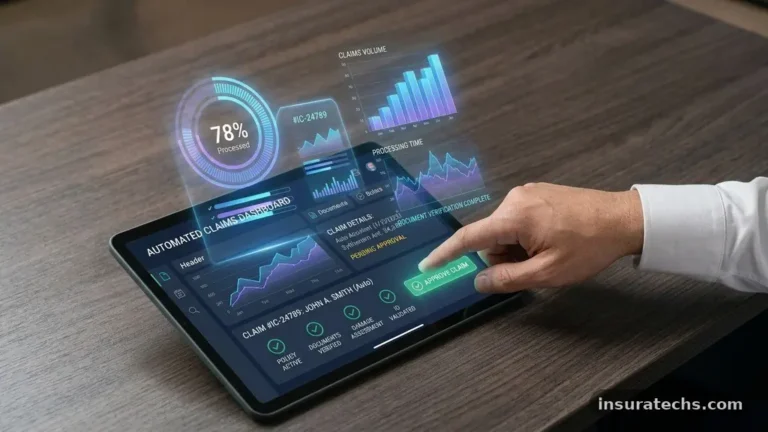
Digital Insurance: How Technology Is Changing the Customer Experience
Digital insurance has fundamentally shifted how policyholders interact with their providers, moving away from paper-heavy processes toward instant, mobile-first solutions. As technology reshapes the insurance industry, customers now expect the same level of convenience they experience in retail or banking. By leveraging data and automation, companies are no longer just passive risk managers; they are becoming active partners in their customers’ daily lives.
Understanding how these changes manifest is essential for anyone looking to make sense of the modern marketplace. This article explores the specific ways these innovations are altering the relationship between insurers and the people they serve.
Instant Policy Issuance and Personalized Coverage
The traditional experience of waiting weeks for a policy document to arrive by mail is rapidly becoming a relic of the past. Today, digital insurance platforms allow for near-instant underwriting, where algorithms process applicant data in seconds.
By pulling information from public records, credit bureaus, and even telematics devices, insurers can assess risk with unprecedented precision. This means you can often receive a quote, bind a policy, and download your proof of insurance before finishing your morning coffee.
Personalization has also moved beyond simple age or location-based brackets. Modern systems analyze granular data points to tailor coverage to individual lifestyles.
For instance, a driver who only uses their car on weekends might be offered a pay-per-mile policy, while a homeowner might receive automated alerts about potential water leaks based on smart-home sensors. This shift moves the insurance industry toward a model of preventative care rather than just reactive compensation.
Streamlining the Claims Process
Claims are the moment of truth for any policyholder, and technology has drastically reduced the friction historically associated with this process. Instead of waiting for an adjuster to visit a property or inspect a vehicle, many companies now use image recognition software.
You can simply upload photos of damage through a mobile app, and the system performs an initial assessment almost immediately. This speed is a significant departure from the manual, multi-step workflows that defined the industry for decades.
Automation also plays a major role in speeding up payouts for straightforward claims. When a claim falls within predefined parameters, smart contracts can trigger automatic payments without human intervention.
This capability is particularly useful for travel insurance or weather-related events, where the data confirming the event is objective and readily available. By removing the administrative backlog, insurers can focus their human resources on complex, high-stakes claims that require empathy and nuanced judgment.
The Rise of Telematics and Behavioral Data
Telematics has turned the concept of risk assessment into a dynamic, ongoing conversation between the insurer and the customer. By installing a device in a vehicle or using a smartphone app to track driving habits, insurers can offer discounts based on actual behavior rather than statistical averages.
This data-driven approach encourages safer driving, as customers receive real-time feedback on their speed, braking patterns, and cornering. It turns insurance into an active behavioral coaching tool.
This focus on data extends to health and life insurance as well. Wearable devices now track physical activity, sleep quality, and heart rate, providing insurers with a clearer picture of long-term health trends.
While privacy concerns remain a major topic of debate, many customers are happy to share this data in exchange for lower premiums or wellness rewards. This creates a mutually beneficial loop where the insurer gains better risk insight and the customer gains a financial incentive to stay healthy.
Comparison of Traditional vs. Digital Insurance Features
The following table highlights the core differences between legacy insurance models and modern digital-first platforms.
| Feature | Traditional Insurance | Digital Insurance |
|---|---|---|
| Underwriting Time | Days to weeks | Seconds to minutes |
| Claims Submission | Phone, mail, or agent | Mobile app, photo upload |
| Policy Management | Paper-based, agent-led | Self-service portal |
| Pricing Model | Static, annual rates | Dynamic, usage-based |
Empowering Customers Through Self-Service Portals
Modern customers demand autonomy, and digital insurance delivers this through intuitive, 24/7 web and mobile portals. You no longer need to call an agent just to update your address, change a deductible, or add a driver to your policy.
These self-service interfaces provide transparency, allowing you to see exactly what your premium covers and how changes in your coverage affect your costs. This level of control builds trust by removing the “black box” nature of policy management.
These portals also act as a centralized hub for all your insurance needs. Many platforms now integrate document storage, allowing you to keep digital copies of your policy, receipts, and even home inventories in one place.
By reducing the reliance on human agents for routine tasks, companies can keep operational costs lower, which in turn can lead to more competitive pricing for the end-user. The National Association of Insurance Commissioners provides further context on the regulatory frameworks that ensure these digital tools remain fair and secure for consumers.
Artificial Intelligence and Virtual Assistance
Artificial intelligence is becoming the backbone of customer support in the insurance sector. Chatbots and virtual assistants are now capable of answering complex questions about coverage, explaining policy terms, and guiding users through the claims process.
These tools are available at any hour, ensuring that you can get help when you need it most, rather than waiting for business hours to speak with a representative. They handle the high volume of routine inquiries, freeing up staff for more sensitive interactions.
Beyond simple support, AI is being used for sophisticated fraud detection. By analyzing patterns in claim submissions, machine learning models can flag suspicious activity that a human might miss.
This technology helps keep premiums lower for the honest majority by identifying and preventing fraudulent payouts. It is a quiet but powerful way that technology improves the overall stability of the insurance ecosystem for everyone involved.
Key Benefits of Digital Adoption
The transition toward a digital-first approach offers several clear advantages for both companies and their clients. The following list outlines the primary drivers behind this industry-wide transformation:
- Reduced administrative overhead, leading to more competitive premium pricing.
- Greater transparency in how risk is calculated and how premiums are determined.
- Faster resolution times for both policy issuance and claim settlements.
- Increased flexibility through modular coverage options that adapt to life changes.
- Enhanced accessibility for customers in remote or underserved locations.
Frequently Asked Questions
Is digital insurance less secure than traditional insurance?
Digital insurance platforms typically employ high-level encryption and multi-factor authentication, often exceeding the security standards of paper-based systems. While no system is immune to risk, established carriers invest heavily in cybersecurity to protect sensitive user data.
Can I still talk to a human if I use a digital insurer?
Yes, most digital-first insurance companies maintain a hybrid model. While they encourage the use of self-service tools for efficiency, they provide human support via phone, email, or live chat for complex issues or claims that require personal attention.
Do digital insurers provide the same level of coverage as legacy companies?
The core coverage products offered by digital insurers are generally identical to those provided by traditional carriers. They are subject to the same state regulations and financial solvency requirements, ensuring that your protection remains valid regardless of the platform used to purchase it.
How does usage-based insurance actually save money?
Usage-based insurance uses telematics to measure your actual risk rather than relying on demographic assumptions. If you demonstrate safe habits, such as avoiding late-night driving or braking gently, the insurer can lower your premiums because you represent a lower statistical risk to them.
Conclusion
The evolution of digital insurance is fundamentally transforming the relationship between providers and their customers. By leveraging data, AI, and mobile-first interfaces, the industry has become faster, more transparent, and significantly more personal. These advancements are not just about convenience; they represent a move toward a more proactive model of risk management.
As these technologies continue to mature, you can expect an even higher degree of personalization and efficiency in how you interact with your policies. Embracing these digital tools allows you to take greater control over your financial protection and ensure that your coverage truly fits your modern lifestyle.