How Artificial Intelligence Is Changing the Insurance Industry
Understanding how artificial intelligence is changing the insurance industry requires looking past the hype to see the practical shifts in daily operations. From automating routine paperwork to refining complex actuarial models, technology is fundamentally reshaping how carriers price risk and interact with policyholders. By processing massive datasets in seconds, these systems provide insights that were previously hidden from human analysts.
Readers will learn how these advancements translate into faster claims, more precise premiums, and a more responsive relationship between companies and their clients. This transformation is not about replacing human expertise but rather augmenting it with speed and accuracy that were once impossible.
Automated Claims Processing
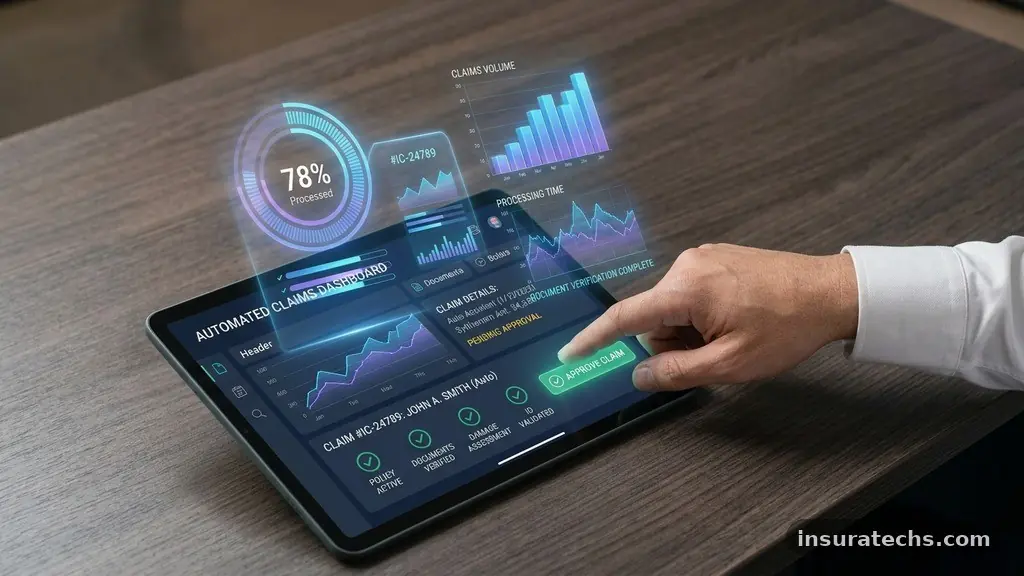
The most visible way that artificial intelligence is changing the insurance industry is through the automation of the claims lifecycle. Historically, filing a claim involved days or weeks of manual review, physical inspections, and back-and-forth correspondence.
Today, computer vision and machine learning models can analyze photos of damaged property or vehicles to estimate repair costs in near real-time. This reduces the administrative burden on adjusters and provides policyholders with a much faster resolution.
When a customer submits a photo of a minor car accident, the software identifies the specific parts damaged and cross-references repair costs from a database of local shops. It can immediately offer a settlement amount or trigger an automated workflow for further inspection if the damage is severe.
This process reduces the “cycle time” of a claim from several days down to a few minutes. Insurers report that this speed significantly increases customer satisfaction, as people in stressful situations value quick, transparent answers above all else.
The technology also acts as a powerful tool for fraud detection during the claims process. Traditional systems often relied on manual red flags, such as suspicious patterns noticed by an experienced investigator. Modern systems, however, scan millions of claims simultaneously to identify subtle anomalies that a human might miss.
For instance, if a specific image has been submitted for multiple claims across different accounts, the algorithm flags it for manual review instantly. This proactive stance helps maintain the integrity of the pool and keeps premiums lower for the honest majority.
Precision Underwriting and Risk Assessment
Underwriting is the heart of the insurance business, and it is currently undergoing a massive evolution driven by data analytics. Instead of relying solely on broad historical averages, insurers can now use granular data to assess risk at an individual level.
This shift allows for “hyper-personalization,” where premiums are based on actual behavior rather than just demographics like age or zip code. For example, telematics devices in cars or wearables for health insurance provide a continuous stream of data.
This data stream allows insurers to offer dynamic pricing models that reward safe choices in real-time. A driver who consistently adheres to speed limits and avoids hard braking can see their premiums decrease, creating a direct incentive for safer behavior.
Similarly, health insurance programs that track activity levels can offer discounts to individuals who maintain consistent exercise habits. These programs turn the insurance relationship from a passive, annual transaction into an active, daily partnership.
The shift toward data-driven underwriting also helps insurers enter markets that were previously considered too risky or difficult to model. By synthesizing diverse data sources, from satellite imagery for crop insurance to social media sentiment for liability coverage, firms can build more accurate risk profiles.
This capability allows for the creation of new products that match the specific needs of modern businesses and individuals. As this OECD report on artificial intelligence highlights, the potential for innovation in financial services is immense when data is handled with precision.
Impact on Insurance Agents and Roles
A common concern is whether technology will render the human insurance agent obsolete, but the reality is more nuanced. While routine tasks are increasingly handled by machines, the role of the agent is shifting toward high-value advisory work.
Humans excel at handling complex, emotionally charged situations that require empathy and nuanced judgment. When a major loss occurs, such as a house fire, a policyholder needs a person to talk to, not a chatbot.
Agents are now using AI-powered tools to become more productive and effective in their client relationships. Instead of spending hours preparing quotes or searching through policy documents, they use software to generate tailored recommendations in seconds.
This allows them to spend more time on relationship building and complex problem-solving. The technology acts as a “co-pilot,” surfacing relevant information about a client’s history or potential coverage gaps during a conversation.
The following table highlights the shift in focus for insurance professionals as these technologies become standard:
| Task Category | Traditional Approach | AI-Augmented Approach |
|---|---|---|
| Data Entry | Manual typing and filing | Automated extraction and entry |
| Claims Review | Manual inspection and report writing | Computer vision and predictive scoring |
| Client Advice | General product knowledge | Data-driven, personalized insights |
| Fraud Detection | Human intuition and spot checks | Pattern recognition across datasets |
Enhancing Customer Service
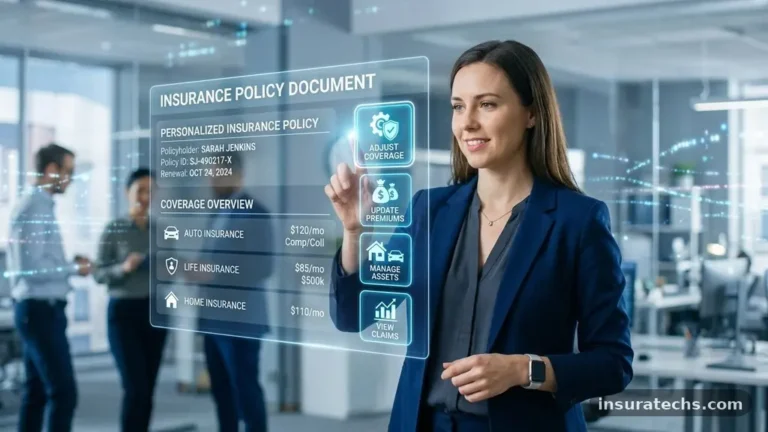
Customer service in the insurance sector has historically suffered from slow response times and rigid, bureaucratic processes. Artificial intelligence is changing this by providing 24/7 support through sophisticated virtual assistants and chatbots.
These tools can handle basic inquiries, such as checking policy status, updating contact information, or explaining coverage details, without any human intervention. This immediate accessibility is a major upgrade from waiting on hold during traditional business hours.
Beyond simple tasks, these systems are becoming better at understanding the intent behind a customer’s query. By using natural language processing, they can interpret the context of a request and provide accurate, relevant answers rather than generic links.
If a question is too complex, the system seamlessly escalates the issue to a human agent, providing them with a summary of the conversation so the customer doesn’t have to repeat themselves. This “hand-off” mechanism is a crucial part of creating a positive user experience.
The integration of these tools also allows for proactive communication. Instead of waiting for a customer to call, an insurer might use predictive analytics to notify a homeowner of an impending storm, offering tips on how to protect their property.
This shift from reactive to proactive service changes the fundamental perception of the insurance company. It transforms the brand from a bill collector into a helpful partner that actively works to prevent losses before they happen.
Improving Actuarial Accuracy
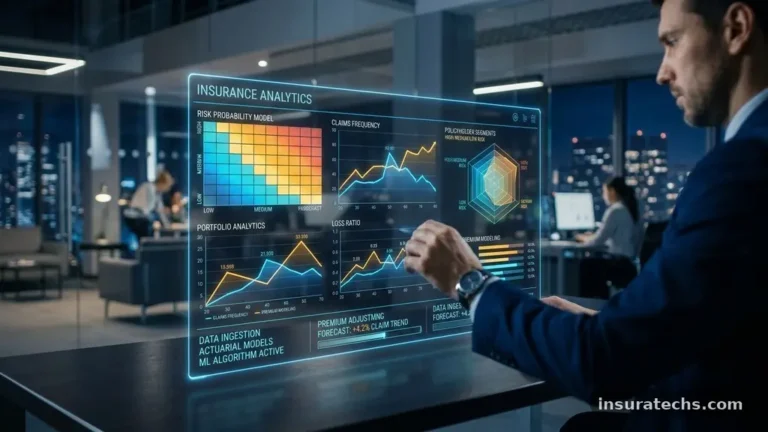
Actuaries have always relied on statistics to predict future events and set appropriate pricing. Today, they have access to vastly more data and the computing power to process it in ways that were previously impossible.
Traditional actuarial models were often limited by the number of variables they could effectively process. Now, machine learning algorithms can ingest thousands of variables simultaneously, identifying correlations that are not apparent to human statisticians.
This increased accuracy helps ensure that the company remains financially solvent while remaining competitive in its pricing. If an insurer can predict risk more accurately than its competitors, it can price its policies more aggressively for low-risk customers while avoiding bad bets.
This is a significant competitive advantage in a crowded market. It also leads to a more equitable system where people are charged prices that truly reflect their individual risk profile.
The use of these advanced models also helps in long-term strategic planning. By simulating different economic scenarios or climate change impacts, insurers can stress-test their portfolios against a wide range of future events.
This foresight is vital for maintaining the stability of the industry in an increasingly unpredictable world. It allows companies to adjust their capital reserves and reinsurance strategies well in advance of potential crises.
Ethical Considerations and Bias
As the industry embraces these powerful tools, the question of fairness and bias becomes increasingly important. Algorithms are only as good as the data they are trained on, and historical data often contains biases that can be perpetuated by machines.
If a model is trained on data from a time when certain neighborhoods were unfairly excluded from coverage, it may replicate that behavior. This creates a significant ethical challenge for firms that want to remain both profitable and fair.
Regulators are paying close attention to this issue, pushing for transparency in how algorithms make decisions. Companies are now tasked with performing regular audits of their models to ensure they do not produce discriminatory outcomes.
This includes testing for “proxy variables,” where an algorithm might use seemingly neutral data—such as shopping habits or educational background—to infer protected characteristics like race or gender. Maintaining public trust is essential for the long-term viability of these technologies.
Transparency also extends to the customer experience. When a claim is denied or a premium is increased, policyholders deserve an explanation they can understand.
The field of “explainable AI” is focused on developing systems that can articulate the reasoning behind their decisions in plain language. This allows for a fair appeal process and ensures that the human element of accountability remains central to the business.
Future Trends in Insurance Technology
The next wave of innovation will likely involve the integration of Internet of Things (IoT) devices into every aspect of the insurance landscape. We are moving toward a future where “smart homes” and “connected cities” will provide continuous feedback to insurers.
Imagine a home that automatically shuts off the water main if a leak is detected, or a building that notifies the fire department the moment a smoke sensor triggers. These technologies will drastically reduce the frequency and severity of claims.
Blockchain technology is also expected to play a role in streamlining the industry by providing a secure, transparent ledger for transactions. This could simplify complex tasks like reinsurance contracts or the verification of medical records.
By reducing the number of intermediaries involved in these processes, companies can lower costs and increase speed. The combination of these technologies will likely lead to even more radical shifts in how we define and purchase coverage.
Key areas for future growth include:
- Hyper-localized weather modeling for climate-resilient property insurance.
- AI-driven mental health support integrated into life and health insurance policies.
- Automated legal review for complex commercial liability claims.
- Blockchain-based automated smart contracts for travel and event insurance.
- Advanced cybersecurity insurance that actively monitors for digital threats.
FAQ
Will artificial intelligence replace insurance agents?
No, technology is designed to assist agents rather than replace them. While automated systems handle routine tasks, human agents are essential for managing complex claims and providing the empathy that clients need during difficult times. The role of the agent is evolving toward higher-value advisory work.
How does AI affect the privacy of my data?
Data privacy is a major priority for insurers, and they are subject to strict regulations regarding how they collect and use your information. Most companies use encrypted, anonymized data to train their models, ensuring that individual identities are protected while still gaining the insights needed to improve services.
Is it true that AI is denying healthcare claims?
Algorithms are used to process claims faster, but they are generally governed by strict rules and human oversight. If a claim is flagged or denied, there is almost always a process to appeal the decision, which involves a review by human medical professionals to ensure accuracy and fairness.
What are the biggest benefits of these changes for the average consumer?
The primary benefits for consumers are speed and personalization. You can expect faster claim payouts, premiums that more accurately reflect your personal risk level, and a much more efficient, responsive experience when interacting with your insurance provider.
Closing Thoughts
How artificial intelligence is changing the insurance industry represents a fundamental shift toward a more efficient, data-driven, and responsive ecosystem. While the transition brings challenges related to ethics and implementation, the potential for faster claims, fairer pricing, and improved customer engagement is substantial. By embracing these advancements, companies are not just updating their software; they are reimagining the relationship between the insurer and the insured.
As this technology matures, the industry will continue to evolve, moving away from reactive damage control toward a future of proactive risk prevention. Staying informed about these developments will help you make better decisions about your own coverage and understand the changing landscape of modern financial services.