The Role of Big Data in Modern Insurance
The role of big data in modern insurance has shifted from a theoretical advantage to the primary engine of industry operations. By processing vast streams of information, companies now make decisions based on precise probabilities rather than broad demographic averages. This evolution changes how premiums are calculated, how claims are settled, and how insurers interact with their customers every single day.
Understanding the role of big data in modern insurance requires looking at how traditional actuarial science has evolved into high-speed, automated predictive modeling. Instead of relying solely on historical tables, firms now integrate real-time inputs from sensors, social media, and digital activity to build a dynamic profile of risk. This transition allows for a more personalized approach, where a policyholder’s specific behavior influences their coverage costs more directly than ever before.
Precision Pricing Through Predictive Modeling
In the past, actuaries grouped people into large, static risk pools based on age, location, or vehicle type. Today, the role of big data in modern insurance allows for hyper-segmentation, where an individual’s unique habits dictate their premium. Insurers gather millions of data points to forecast the likelihood of a claim, moving away from “one-size-fits-all” pricing models.
Predictive analytics software processes these massive datasets to identify subtle patterns that human analysts would miss. For example, a driver’s braking patterns or the frequency of their late-night travel can now influence auto insurance rates in real-time. This creates a feedback loop where safer behavior leads to lower costs, directly benefiting the consumer who adopts better habits.
These models also help insurance companies identify high-risk scenarios before they manifest as costly claims. By analyzing weather patterns, economic indicators, and even local crime statistics, firms can adjust their exposure levels in specific geographic regions. This proactive stance keeps premiums stable for the broader pool of policyholders by reducing the frequency of unexpected financial shocks.
Transforming the Claims Process
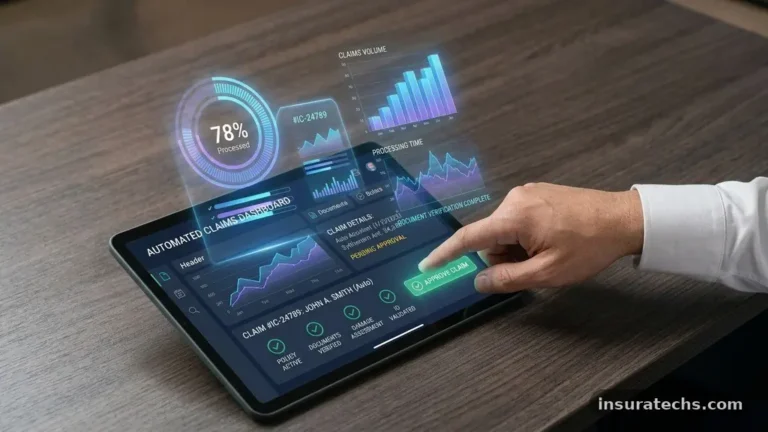
One of the most visible impacts of big data is the acceleration of the claims lifecycle. Traditionally, filing a claim involved physical paperwork, manual inspections, and weeks of waiting for an adjuster to verify the damage. Modern systems now automate this process, using image recognition and satellite imagery to validate losses instantly.
When a disaster occurs, such as a major storm, insurers use historical data and real-time sensor feeds to estimate the total impact before a single claim is even filed. This allows companies to deploy resources to the hardest-hit areas immediately, improving the speed of recovery. Providing this level of service builds significant trust with policyholders during their most vulnerable moments.
The following table demonstrates the shift in processing times for standard property damage claims since the implementation of automated data analytics.
| Process Phase | Traditional Method | Modern Data-Driven Method |
|---|---|---|
| Initial Assessment | 3–5 Business Days | Minutes (Automated) |
| Verification | Manual Inspection | Satellite/Sensor Analysis |
| Payout Approval | 10–14 Days | Under 24 Hours |
Enhancing Customer Engagement
Insurers are no longer just passive providers of protection; they are becoming active partners in risk mitigation. By leveraging big data, companies can offer personalized advice that helps customers avoid accidents or property damage in the first place. This shift from “repair and replace” to “predict and prevent” is a direct result of data-driven insights.
For instance, wearable devices in the health insurance sector track daily activity, sleep quality, and heart rate. When a policyholder meets certain wellness benchmarks, they may receive discounts or wellness rewards. This creates a mutually beneficial relationship where the insurer reduces the probability of a health-related claim while the customer gains a financial incentive to stay healthy.
This approach transforms the brand experience from a transactional necessity into a valuable service. Customers who interact with their insurer’s app to receive safety alerts or fitness coaching are more likely to remain loyal. This increased engagement reduces churn rates, which is a significant metric for the long-term health of any insurance business.
Detecting Fraud with Advanced Analytics
Fraud remains a multi-billion dollar problem for the global insurance industry, but big data is providing a powerful solution. Modern systems can cross-reference claims against massive databases to spot inconsistencies that suggest foul play. This might include identifying multiple claims for the same asset or detecting patterns that align with known criminal syndicates.
Machine learning algorithms are particularly effective at identifying “anomalies” in real-time. If a claim is filed for a vehicle accident that occurred in a location where the car’s GPS data shows it wasn’t present, the system immediately flags it for human review. This prevents fraudulent payments from being processed, which helps keep premiums lower for honest customers.
These systems learn from every investigation, becoming more accurate with each passing year. As criminals find new ways to bypass traditional security, the software adapts by identifying the subtle behavioral markers of deceptive activity. You can learn more about the evolving standards in this sector through the National Association of Insurance Commissioners, which monitors industry-wide data security and transparency trends.
Streamlining Underwriting Efficiency
Underwriting is the backbone of the insurance business, involving the assessment of risk before a policy is ever issued. In the past, this was a slow, manual process requiring extensive self-reporting from the applicant. Today, big data allows for “instant underwriting,” where the majority of standard applications are approved or denied in seconds.
By pulling data from external sources—such as credit reports, public property records, and digital identity verification—insurers can confirm the information provided by the applicant almost instantly. This removes the friction from the buying process, making it easier for consumers to get covered. It also ensures that the risk profile being insured is accurate, which protects the company’s financial stability.
This speed does not come at the expense of accuracy. In fact, by using a broader range of data, underwriters can identify risks that might have been hidden in a traditional application. This leads to more precise pricing, ensuring that low-risk individuals aren’t subsidizing the costs of higher-risk applicants.
The Role of IoT in Risk Assessment
The Internet of Things (IoT) provides a constant stream of information that changes the role of big data in modern insurance. Smart home sensors, telematics in vehicles, and industrial monitoring tools give insurers a granular view of reality. This data is the raw material that makes modern predictive modeling possible.
Consider the impact of smart water sensors in a home. If a pipe bursts while the owner is away, the sensor detects the moisture and alerts the homeowner or shuts off the main water valve.
The insurer avoids a massive water damage claim, and the homeowner avoids a ruined property. This is the ultimate win-win scenario enabled by technology.
* Telematics: Tracks speed, braking, and location to provide usage-based car insurance.
* Wearables: Monitors physical activity to influence health and life insurance premiums.
* Smart Home Sensors: Detects smoke, leaks, or unauthorized entry to prevent property loss.
* Industrial IoT: Monitors machinery in commercial settings to predict and prevent equipment failure.
Ethical Considerations and Data Privacy
While the benefits of big data are clear, the industry must address the growing concern regarding privacy. As insurers collect more intimate details about their customers, the burden of protecting that data becomes heavier. Maintaining the trust of policyholders is essential, as any misuse of personal information could lead to regulatory backlash and loss of reputation.
Transparency is the key to maintaining this trust. Customers are generally willing to share their data if they understand what they are getting in return, such as lower rates or better service. Insurers must be clear about how information is collected, stored, and utilized to ensure that the use of data remains ethical and compliant with global privacy laws.
The future of the industry depends on finding the right balance between personalization and privacy. As technology continues to evolve, the most successful companies will be those that use data to serve the customer while respecting their boundaries. Protecting this information is not just a legal requirement; it is a fundamental pillar of the industry’s long-term viability.
Frequently Asked Questions
How does big data actually lower insurance premiums?
Big data allows for more accurate risk assessment. By identifying low-risk behaviors or avoiding fraudulent claims, companies reduce their overall losses, which allows them to pass those savings on to the customer in the form of competitive pricing.
Is my personal information safe with insurance companies?
Insurance companies are subject to strict data protection regulations. Most reputable firms invest heavily in cybersecurity to protect sensitive information, as a data breach would be catastrophic for both their reputation and their business.
Can I opt out of data tracking if I don’t want to share my information?
Yes, most usage-based programs are voluntary. You can usually choose a traditional policy if you are uncomfortable with the idea of sharing data from devices like telematics or wearables, though you may miss out on potential discounts.
How do insurance companies use social media data?
While some insurers look at publicly available information to verify facts during a claim, they generally do not use social media to “spy” on customers for pricing. Most data used for underwriting comes from verified, third-party sources rather than personal social media feeds.
Will artificial intelligence eventually replace human insurance agents?
AI is excellent at processing data and handling routine tasks, but it cannot replace the empathy and complex problem-solving skills of a human agent. The future likely involves a hybrid model where agents use AI tools to provide better service to their clients.
Conclusion
The role of big data in modern insurance is fundamentally changing the relationship between the provider and the policyholder. By shifting toward a proactive, data-driven model, the industry is becoming more efficient, personalized, and capable of preventing losses before they happen. This evolution creates a safer environment for everyone involved, as technology continues to bridge the gap between risk and coverage.
As you explore options for your own coverage, remember that sharing relevant data can often lead to tangible benefits. Whether it is through a telematics program or a wellness incentive, the data you provide can work in your favor. Engaging with these modern systems allows you to take control of your risk profile and secure the best possible terms for your specific situation.